Fire Suppression and Cooling Engineering Resilience in the Data Center
Fire Suppression and Cooling: The DRP Perspective
In the domain of Governance, Risk, and Compliance (GRC), we often spend the majority of our time discussing logical controls, encryption, and identity management. However, a robust Disaster Recovery Plan (DRP) is only as strong as the physical infrastructure it rests upon. When we talk about data center resilience, the twin pillars of fire suppression and precision cooling are not merely facility management concerns; they are critical engineering requirements that dictate the survival of the enterprise's digital core. At iExperts, we view these physical controls through the lens of business continuity and risk mitigation.
The Criticality of Fire Suppression in DRP
Fire is perhaps the most immediate physical threat to a data center. Traditional water-based sprinkler systems are often counterproductive in environments filled with high-voltage electronics. A DRP-aligned strategy requires the implementation of gaseous fire suppression systems, often referred to as clean agents. These systems are designed to extinguish fires without damaging sensitive hardware or leaving residue that requires extensive cleanup, which would otherwise inflate your Recovery Time Objective (RTO).
- Clean Agent Systems: Solutions like FM-200 or Novec 1230 that suppress fire at the molecular level.
- Early Warning Smoke Detection (VESDA): High-sensitivity air sampling that detects potential fires before they even ignite.
- Zoned Suppression: The ability to isolate suppression to specific server rows to prevent total facility downtime.
"The physical layer is the foundation of the entire GRC stack. If the cooling fails, the most advanced encryption in the world won't keep your services online."
Precision Cooling and Environmental Redundancy
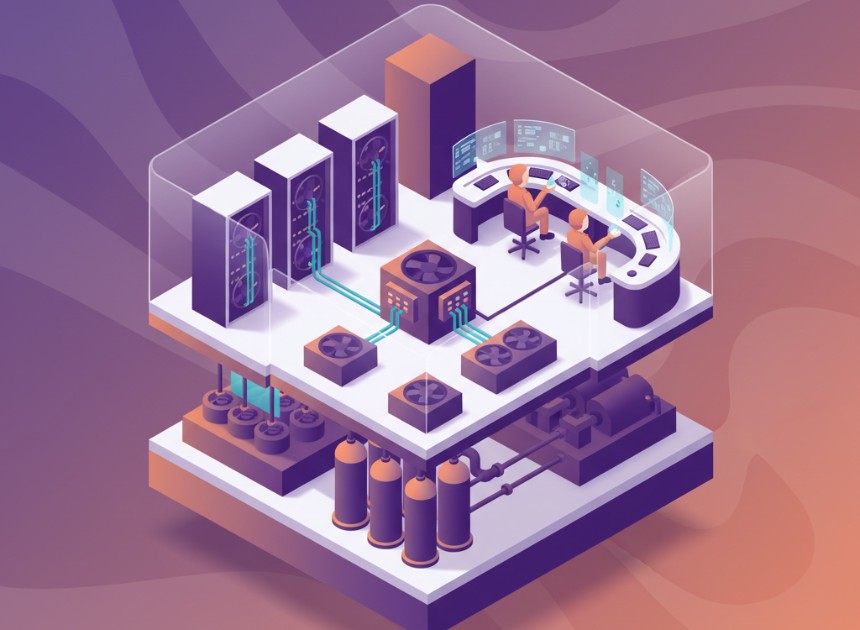
Heat is the silent killer of server reliability. Precision cooling is not just about keeping the room comfortable; it is about maintaining a constant, specific temperature and humidity level to prevent hardware failure and thermal runaway. From a DRP perspective, iExperts recommends an N+1 or 2N redundancy model for all HVAC components. This ensures that even during a primary unit failure, the environmental conditions remain within the operating thresholds defined by ASHRAE standards.
- Hot/Cold Aisle Containment
- Redundant Chiller Loops
- Real-time Thermal Monitoring
Pro Tip
Always ensure your Building Management System is integrated with your SIEM/SOAR platform. Monitoring Dew Point and airflow pressure can provide early indicators of cooling failures long before server sensors trigger an emergency shutdown.
Conclusion: The iExperts Advantage
Integrating fire suppression and cooling into your Disaster Recovery Plan is a non-negotiable step for modern enterprises. These engineering requirements ensure that physical disasters do not translate into permanent data loss or prolonged outages. At iExperts, we help organizations bridge the gap between facility engineering and IT governance, ensuring that every layer of your business is protected against the unexpected. True resilience starts from the ground up.