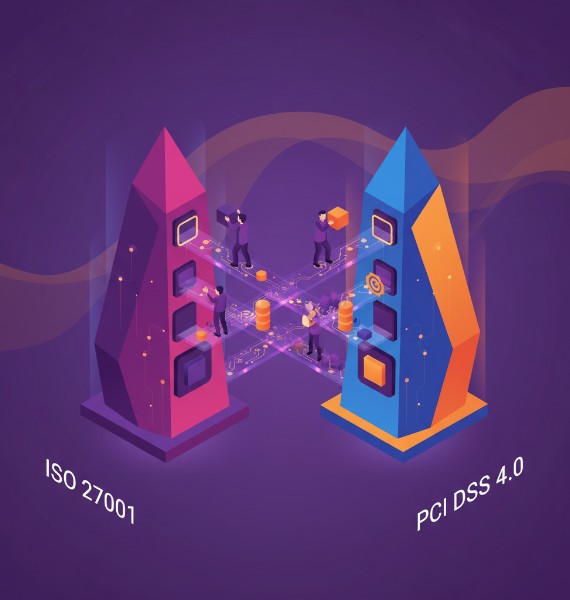
The Unified Control Framework Simplifying Global Compliance

The Unified Control Framework: Simplifying Global Compliance
In the current regulatory climate, organizations are frequently burdened by an ever-growing list of requirements. Managing ISO/IEC 27001:2022, SOC 2, PCI DSS 4.0, and GDPR as independent silos is not just inefficient; it is a financial drain. At iExperts, we have observed that companies maintaining separate compliance workstreams often duplicate over 60 percent of their effort. The solution lies in the adoption of a Unified Control Framework (UCF).
The High Cost of Compliance Silos
When compliance is handled in a reactive, standard-by-standard manner, the organization suffers from audit fatigue. Stakeholders are asked for the same evidence multiple times by different teams, leading to burnout and data inconsistency. By consolidating these requirements, iExperts helps organizations transition from a checklist-driven culture to a robust governance model.
"Complexity is the enemy of security. A unified framework turns compliance from a recurring headache into a strategic business advantage."
Core Benefits of a Unified Approach
Implementing a UCF allows for a "test once, satisfy many" methodology. This streamlining is critical for scaling operations in international markets where NIST CSF 2.0 and localized privacy laws may overlap significantly.
- Reduced Operational Costs: Eliminating redundant control testing and documentation.
- Improved Visibility: A single pane of glass for all risk and compliance activities.
- Faster Market Entry: Rapidly map existing controls to new regional regulations.
Key Deliverables for Implementation
Transitioning to a UCF requires a structured roadmap. The following components are essential for a successful migration:
- Cross-Standard Mapping
- Centralized Evidence Repository
- Harmonized Control Language
Pro Tip
When mapping your controls, use a common denominator such as the Shared Assessment Model to create a master control list. This allows iExperts consultants to help you identify which specific control activities satisfy multiple regulatory requirements simultaneously.
The journey toward unified compliance is a marathon, not a sprint. However, the investment pays for itself through increased agility and significantly lower audit fees. By partnering with iExperts, your organization can move beyond the chaos of manual tracking and embrace a future of automated, intelligent governance.